
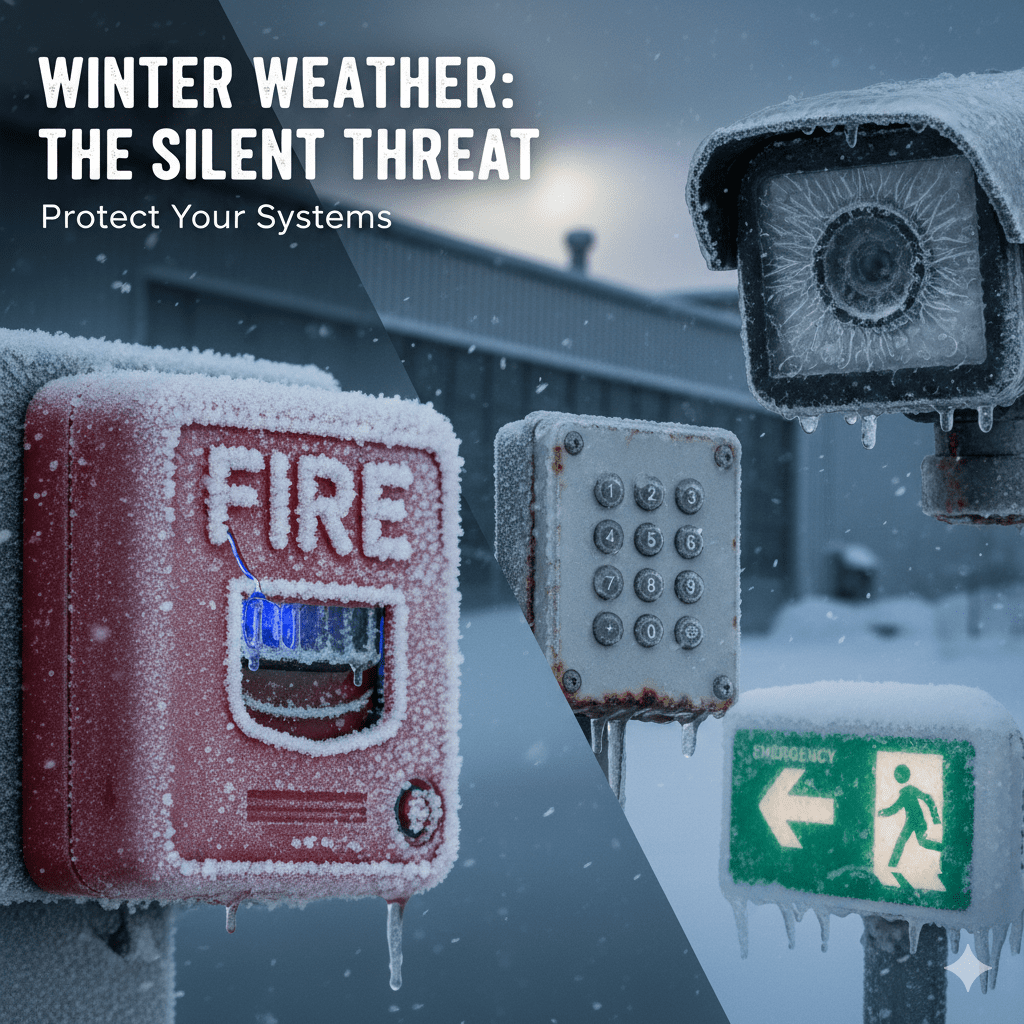
The cold snap that hits Lancashire every winter does not just make your heating bills shoot up. It is also putting serious strain on your fire alarms, CCTV cameras, access control systems, and every other bit of safety equipment protecting your premises. Most business owners do not realise their security and fire protection systems are quietly struggling until something actually fails, and by then it is too late.
Fire Alarms Don’t Like the Cold
Your fire alarm system has sensitive detection equipment that really does not appreciate freezing temperatures. Smoke detectors and heat sensors are calibrated to work within specific temperature ranges. When it gets cold in areas like stairwells, loft spaces, or external corridors that are not heated, these devices can start giving false readings or fail to detect actual fire risks altogether.
Condensation is the killer. When warm air from inside your building meets cold surfaces, moisture builds up. That moisture gets into detector housings, corrodes connections, and triggers false alarms at three in the morning. We have seen entire systems go haywire because water has shorted out circuit boards.
External sounders and bell boxes get battered. The plastic housings contract in the cold, seals deteriorate, and water gets in. Once that happens and temperatures drop below freezing, the water turns to ice and expands, cracking components from the inside out. You might not even know your alarm sounder is completely broken until spring.
CCTV Cameras Hate Winter
Check your CCTV footage after a cold night and you will see the picture quality goes to pot. Cameras that work fine in summer suddenly produce grainy, useless images when the mercury drops. The sensors inside do not cope well with extreme cold.
External cameras face the worst of it. Condensation forms on lenses overnight, then freezes, leaving you essentially blind until the sun comes up and melts it off. By then, whoever broke into your yard is long gone. Camera housings crack from repeated freeze and thaw cycles, letting water damage the electronics inside.
Night vision cameras are even worse. Infrared LEDs get less efficient in cold temperatures, which means your night coverage drops right when you need it most. The image processing also slows down, causing lag and missed footage.
Access Control Systems Freeze Up
Card readers and keypads mounted outside are on the front line when winter hits. The electromagnetic locks that secure your doors are particularly vulnerable. These locks generate heat when they are engaged, but in freezing conditions, they struggle to maintain the magnetic force needed to keep doors secure. We have had callouts where locks have literally frozen in place or lost their holding power completely.
Doors that close perfectly in summer might not align with their sensors in winter because the strike plates and mechanisms expand and contract with temperature changes. This triggers constant alarms and creates security vulnerabilities you did not have before.
Battery backup systems do not like the cold either. Chemical reactions in batteries slow down when it is freezing, reducing their capacity. Lose power during a winter storm and your backup batteries might already be too weak to keep things running.
Emergency Lighting Gets Forgotten
Emergency lighting gets ignored until there is a power cut. The batteries that power your emergency lights degrade faster in cold conditions. If you have not had them tested recently, you might discover during an actual emergency that your legally required lighting fails after five minutes instead of the mandated three hours.
External emergency exit signs face corrosion from winter moisture and salt from gritted roads. The seals around these units perish in cold weather, allowing water in that corrodes connections and damages LED arrays.
Why You Need Someone to Check Out Your Systems
These winter problems do not happen overnight. Your systems degrade gradually. You will not notice until something critical fails during a fire when your alarm does not sound, or when someone breaks in and your CCTV footage is useless, or when you cannot evacuate safely because your emergency lighting is dead.
Getting us to check your systems now means we can spot these issues early. We are looking for condensation damage, checking battery capacities, testing detector sensitivity, inspecting seals and housings, and making sure everything still works.
It is not just about avoiding breakdowns. There is a compliance angle too. If someone gets hurt because your fire alarm did not work or your emergency lighting failed, and it comes out that you had not maintained your systems, you are looking at serious legal trouble. The Regulatory Reform (Fire Safety) Order 2005 is pretty clear about maintaining fire safety equipment.
What Actually Gets Checked
When we come out, we test every detector in your fire alarm system, check for moisture, examine wiring for corrosion, and make sure backup power supplies work. For CCTV, we clean lenses, check housing seals, test image quality, and make sure recording equipment captures usable footage.
Access control gets a full workout. We test every reader, check door alignments, verify that electromagnetic locks hold correctly, and make sure backup batteries can actually keep your system running if the power fails. Emergency lighting gets a full discharge test to confirm it will last the required time.
The small problems we find now are cheap and easy to fix. Wait until something fails completely and you are looking at emergency callout fees, rushed replacement parts, and potentially having to shut down parts of your operation while repairs happen.
Winter finds weak points in safety systems fast. Better we find them first during a planned service than you discovering them when you actually need your systems to work. Your fire alarm, CCTV, access control, and emergency lighting are only protecting you if they are actually functioning, and winter makes that a lot harder than you would think.
No responses yet