
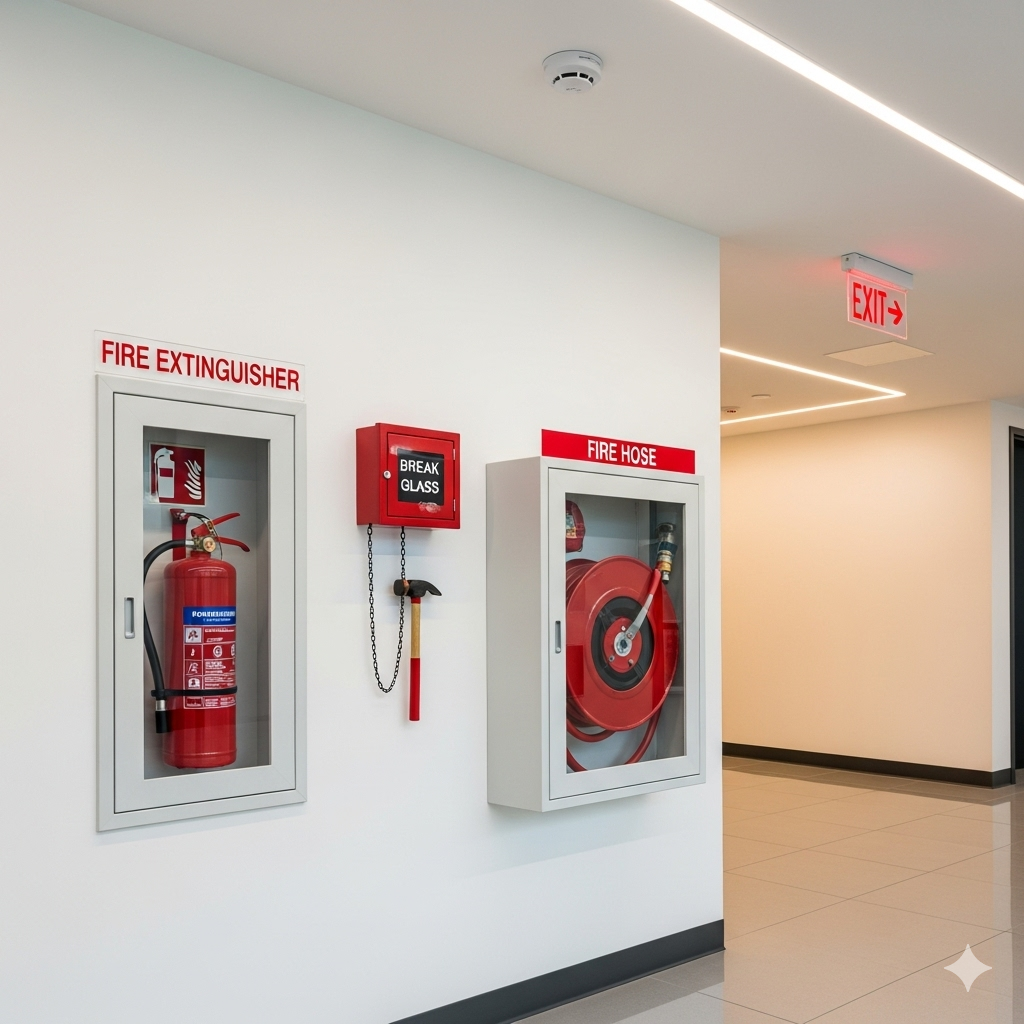
Almost every fire that ends up in the local paper started off as something much smaller and much more ignorable. A flickering light on an alarm panel that everyone assumed was nothing. A fire door that had gone a bit stiff and needed an extra shove to shut properly. A faint burning smell put down to next door’s barbecue. Fire equipment rarely fails without giving some sort of warning first. The trouble is that most people are never told what those warnings actually look like, so they get missed until an engineer explains it after the fact.
Knowing what to look for costs nothing beyond a bit of attention. It’s one of the cheapest forms of protection a business has. Here’s what tends to come up again and again on the sites we visit around Darwen, Burnley and Blackburn.
Start with the panel. A fault light, even one that only flickers on now and then, is not something to leave until the next scheduled visit. It could be a failing battery, it could be a break somewhere in the wiring loop, and either way the panel is telling you the system can no longer be relied on fully. Detectors that have gone yellow, or that are caked in dust or paint overspray after building work, won’t pick up smoke the way they’re supposed to either.
Extinguishers get overlooked more than almost anything else in a building. If the gauge needle has drifted out of the green, there’s a real chance it won’t discharge properly, or at all, when someone actually needs it. Rust around the base, a missing pin, a service tag that expired months ago, any of these is reason enough to get it swapped out rather than waiting for the annual round.
Fire doors are sneaky because they can look completely fine and still be doing a poor job. A door that doesn’t swing shut fully under its own weight, a gap round the frame wider than a few millimetres, a seal that’s peeling or damaged, these all chip away at how well a fire stays contained to one room rather than spreading through a building. Emergency lighting has its own quiet failure mode too, since the only time you find out it’s broken is during a power cut, which is precisely the moment you need it most.
Some industries feel the cost of getting this wrong more sharply than others. Hotels, pubs and leisure venues sit near the top of that list, mostly because they combine overnight guests with kitchens, which are one of the most common sources of ignition in the first place. A fire breaking out in an occupied hotel at 2am is a completely different situation to one in an empty office at lunchtime.
Manufacturing and industrial sites carry their own weight of risk, often involving flammable materials, machinery that runs hot, and big open floor plans where fire can travel a long way before anyone spots it. Even setting the safety risk aside for a moment, the cost of the downtime alone from a serious fire can run into hundreds of thousands of pounds once you factor in lost stock, replaced equipment and the knock on effect with clients who were expecting deliveries.
Care homes and healthcare settings sit in a category of their own, not necessarily because of cost but because of who’s affected. Residents and patients may not be able to evacuate quickly or unaided, and that’s why fire provisions in these buildings are held to a higher standard, with evacuation and nurse call systems needing the same level of upkeep as the detection system itself.
Schools, colleges and nurseries bring a different kind of pressure again, because a fire safety lapse here isn’t purely a financial matter, it’s a safeguarding one, and governors and local authorities are understandably strict about it.
What connects all of these is fairly simple. Skipping a service visit might save a few hundred pounds this year. A fire that a working system would have caught in time rarely stays that cheap once it’s actually happened. If any of what’s above sounds familiar from your own building, it’s worth getting someone out to look before it turns into a much bigger conversation.
No responses yet