
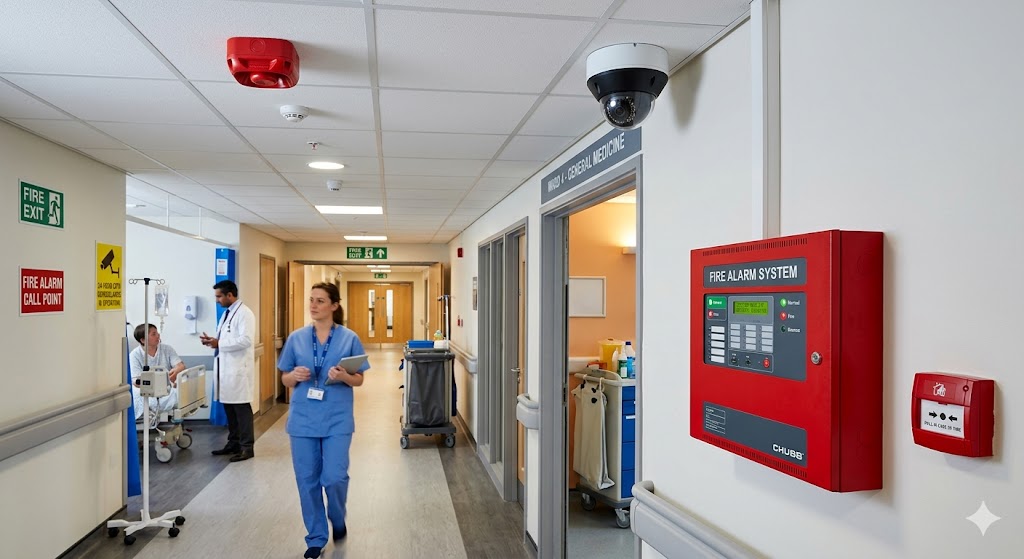
CCTV systems rarely fail all at once. They tend to slip a little at a time, one camera here, one setting there, until a site that used to have full coverage has quietly developed gaps that nobody’s clocked because nobody’s had reason to look closely. Once you know what to look for, most of it is easy to catch early.
The most obvious sign is a feed that’s gone dark, frozen, or stuck on a still image rather than showing something live. It’s surprisingly common for this to go unnoticed for weeks simply because nobody’s watching every screen constantly. Getting into the habit of spot checking live feeds once a week, even for a couple of minutes, catches this kind of failure long before it ever matters.
Image quality is a subtler tell. Footage that’s gone grainy, too dark at night, or washed out by glare during the day usually points to a camera reaching the end of its life, a scratched lens, or infrared sensors on their way out. The camera might still technically be recording. Whether that recording is any use as evidence is a different question entirely.
Storage is worth a proper check too rather than an assumption that everything’s fine. A lot of systems overwrite old footage automatically once storage fills, and retention windows that seemed generous when the system went in can shrink fast as camera resolution increases and file sizes grow with it. A business that thinks it has thirty days of footage available might actually have ten, and usually only finds this out when they go looking for something specific and discover it’s already gone.
Blind spots deserve a proper walk round, particularly on sites that have changed since the cameras first went up. New racking, a parked van, an extension, even a tree that’s grown a bit too well, can quietly block a camera’s view of ground it used to cover. Comparing what’s actually visible against the original camera plan once a year is one of the cheapest ways to catch this before it becomes a problem.
As with fire safety, some sectors feel the cost of a CCTV failure more than others. Retail deals with a constant background of low value incidents like shoplifting, alongside higher value ones such as till fraud and stock discrepancies that are almost impossible to prove one way or another without decent footage. A retailer with coverage gaps often finds losses they should be able to claim back simply can’t be evidenced.
Industrial and warehouse sites face a different kind of exposure, with large perimeters, valuable stock, and long stretches out of hours when nobody’s on site to notice anything wrong. Break ins at industrial units are rarely spur of the moment. They’re usually planned, and the sites chosen tend to be the ones where security looks weakest, which means a poorly maintained system doesn’t just fail to catch what happens, it can end up inviting it in the first place.
Hotels, pubs and other hospitality venues see a steady flow of the public through the door and a corresponding rise in disputes, from alleged slips and falls to arguments between guests. Clear footage is usually the fastest way to sort these out fairly, protecting the business from claims that don’t hold up while backing the ones that do. A gap in coverage at the wrong moment turns a five minute conversation into a drawn out legal one.
Care homes and schools carry the same weight here as they do with fire safety. Care homes lean on footage to protect residents and to defend staff against allegations that don’t stand up, while schools use it for everything from safeguarding to managing who’s coming through the gate. In both cases a failing system isn’t just a security gap, it’s a gap in the evidence that’s meant to protect the people these places have a duty to look after.
It comes back to the same point every time. A camera that looks like it’s working and a camera that’s actually working are two different things, and the only way to tell which one you’ve got is proper, regular maintenance rather than fitting it once and assuming it’ll carry on doing its job for the next decade. If it’s been a while since anyone checked yours properly, that’s probably worth sorting sooner rather than later.
No responses yet